
Helical pile installers in
Rhode Island
Compare local installers, manufacturers, and distributors.


Helical Piles in Rhode Island
Rhode Island packs a lot of foundation variety into a small state. Glacial till, boulders, and shallow ledge are common inland, while the coast and Narragansett Bay shoreline bring sand, marsh soils, and high groundwater. Many homes are older and sit on tight urban lots in Providence and its suburbs, which leaves little room for excavation equipment.
Helical piles suit those conditions because they go in with compact equipment, need no open excavation to dewater, and can support decks, additions, and repairs on existing homes with minimal disruption. On the coast, they can be designed for the uplift and lateral loads that storms and flooding impose. Near salt water, installers usually specify galvanized piles, and the steel can be loaded as soon as installation is complete.
Common uses in Rhode Island
- Decks, porches, and stairs on existing homes
- Additions and sunrooms on tight urban lots
- Underpinning settled foundations in older neighborhoods
- Coastal homes, docks, and boardwalks
- Ground-mount solar arrays
- Light commercial canopies and equipment pads
Frost depth, soils, and codes
Rhode Island's statewide residential code sets the frost line depth at 40 inches in its climatic design criteria table, with a reduced figure for New Shoreham (Block Island). A footnote requires footings for attached accessory structures such as decks to extend 3 feet 4 inches below grade. Coastal properties also fall under flood-zone and coastal resource rules, and work near the shoreline may need separate state coastal approval, so ask about it early in planning. Small detached sheds under 200 square feet are exempt from frost-depth footings under the same footnote.
Manufacturers typically document helical pile capacities through ICC-ES evaluation reports issued under acceptance criteria AC358, and the local building department issues the permit. An engineer normally sets the required depth and the installation torque that correlates to the design load.
Typical costs in Rhode Island
Helical pier pricing in Rhode Island depends on the number of piers, how deep the load-bearing soil sits, pile size, and access for equipment. Ledge, boulders, or coastal corrosion protection can raise costs. See our helical pier cost guide for how installed pricing is typically built up, and get at least two local quotes, since pricing varies by contractor and site.
Find a helical pile installer in Rhode Island
The listings below include installers, foundation repair companies, manufacturers, and distributors that serve Rhode Island, with most activity around Providence, Warwick, Cranston, and Newport. Many contractors also serve nearby Massachusetts and Connecticut. Ask each contractor whether they install to an engineer's torque specification, provide installation logs, and handle the permit filing. If your company installs or supplies helical piles in Rhode Island, you can get listed or advertise here.
Rhode Island helical pile FAQs
How deep do deck footings need to be in Rhode Island?
The state residential code requires footings for attached decks to extend 3 feet 4 inches below grade. Helical piles often go deeper to reach the required torque.
Do helical piles work in rocky Rhode Island soil?
Often, but boulders and ledge can stop a pile short. Installers may relocate the pile or use a rock-bearing detail, and the engineer should approve any change.
Do I need a permit for helical piers in Rhode Island?
Yes, for decks, additions, and foundation work in most cases. Your city or town building official handles the permit.
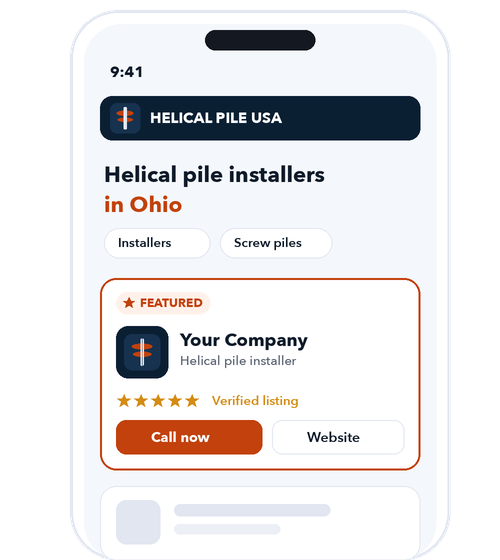
Get your company in front of more helical pile buyers
Helical Pile USA reaches homeowners, engineers, and contractors actively looking for helical pile installers, manufacturers, and distributors. Leave your email and we'll send featured listing and advertising options.


Join Our Network
Whether you're a homeowner, contractor, or helical pile installer, become a part of Helical Pile USA today. Explore our directory, leverage our resources, and connect with the best in the industry.
